
Finding droppings on your deck, roof or in the attic usually means a raccoon has been visiting on a regular basis. Raccoon feces can also carry roundworm eggs, so it matters to identify it correctly and to know what not to do when you find it.
What Raccoon Poop Looks Like
Raccoon droppings vary with what the animal has been eating, but most share the same basic look:
- Size: about 5 to 8 cm (2 to 3 inches) long and 1 to 2 cm (half an inch to three-quarters of an inch) wide
- Shape: tube-shaped with blunt ends, often broken into a few segments, not tapered to a point like many dog droppings
- Colour: dark brown to black when fresh, turning grey and crumbly as it dries
- Contents: seeds, berries, corn, nut shells, insect parts and sometimes fur or small bones
- Smell: strong and musty when fresh
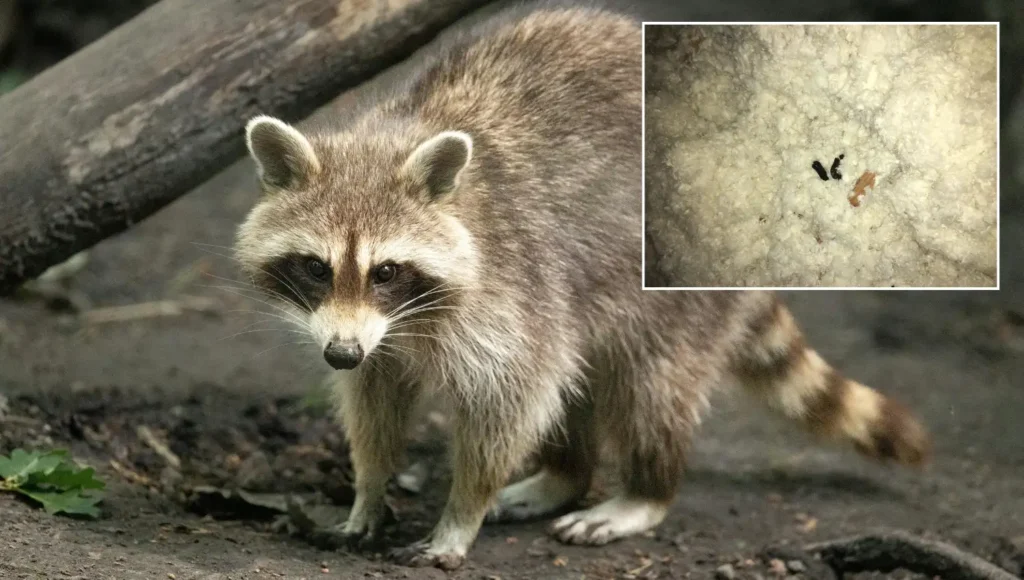
Where Raccoons Leave Their Droppings
Raccoons do not scatter their droppings. They return to the same spot again and again, which creates a pile called a latrine. In Toronto, latrines are most often found:
- On flat roofs, deck boards and the tops of fences
- At the base of trees and on large logs
- In garages, sheds and under porches
- In attic corners and on top of insulation
A single dropping on the lawn could come from an animal that was just passing through. A pile in the same spot, especially on a roof or in an attic, means raccoons are using your property as a base. Latrines are common near ravines and parks in areas like North York and Etobicoke.
How to Tell Raccoon Poop From Other Animals
- Dog: usually tapered at one end and often larger and softer
- Skunk: smaller and usually full of insect parts, often found near the small cone-shaped holes skunks dig in lawns
- Opossum: can look similar to raccoon droppings, so location and other signs matter
- Squirrel: much smaller, around 1 cm, and scattered rather than piled
- Rat: capsule-shaped, about 1 to 2 cm, found along walls and travel routes
If you are not sure, look for other signs: torn soffits, flattened insulation, stains around a roof vent or thumping in the attic after dark. Droppings together with any of these point to raccoons.
Why Raccoon Droppings Are a Health Risk
The main concern is Baylisascaris procyonis, a roundworm that raccoons often carry. Infected raccoons shed microscopic eggs in their feces. The eggs become infectious after a few weeks and can survive in soil and dust for years. People, especially young children, can become infected by accidentally swallowing the eggs after touching contaminated soil, surfaces or hands. Infection is rare, but when it happens it can seriously damage the brain and eyes.
Raccoon droppings and urine can also carry bacteria such as leptospira and salmonella. You can read more in our guide to diseases wildlife can spread to people.
What Not to Do If You Find Raccoon Droppings
- Do not sweep, vacuum or pressure wash dry droppings. It sends eggs into the air.
- Do not handle droppings with bare hands.
- Do not rely on household cleaners. Most do not reliably kill roundworm eggs.
- Keep children and pets away from the area, and stop pets from eating droppings.
If you decide to clean a small amount in an open outdoor area, wear disposable gloves and boots and a respirator rated for fine particles. Dampen the droppings first, scoop them into a bag, double-bag it and wash your hands thoroughly. Heat, such as boiling water on hard surfaces, kills the eggs. For latrines on a roof, in a garage or in an attic, it is safer to have them cleaned by someone with the right equipment.
Raccoon Poop in the Attic
Droppings in the attic mean raccoons are living in your home or using it as a den. Cleaning first does not help, because the raccoons simply return. The right order is to remove the raccoons humanely, seal every entry point, and then clean and disinfect. Our raccoon removal service follows that order, and our attic cleaning and disinfecting service takes care of contaminated insulation and latrines afterwards.
Frequently Asked Questions
How long does raccoon poop stay dangerous?
Roundworm eggs can stay infectious in soil, dust and shaded areas for years, even after the droppings themselves have dried out. Old droppings should be treated with the same care as fresh ones.
Can my dog get sick from raccoon poop?
Yes. Dogs that eat or roll in raccoon droppings can pick up roundworm and other parasites. Call your vet if you think your dog has been in contact with them.
Is raccoon poop the same as dog poop?
No. Raccoon droppings are usually blunt-ended, dark, full of undigested food and found in repeated piles. Dog droppings are usually tapered and found wherever the dog walked.
If you have found droppings on your roof, deck or in your attic, call us for a free inspection. We will find where the raccoons are getting in and take care of the removal, the cleanup and the sealing that keeps them out.